Types of Microelectronics Jobs
Minnesota SCALE prepares you for careers across twelve microelectronics engineering position categories. The descriptions below are meant to help you understand which roles might align with your academic background and interests.
-
Design Engineers create the blueprints for microchips and integrated circuits, translating complex technical requirements into working circuit layouts using specialized software tools.
-
Device Engineers design, develop, and optimize individual semiconductor components — such as transistors and diodes — to meet performance, reliability, and manufacturing requirements.
-
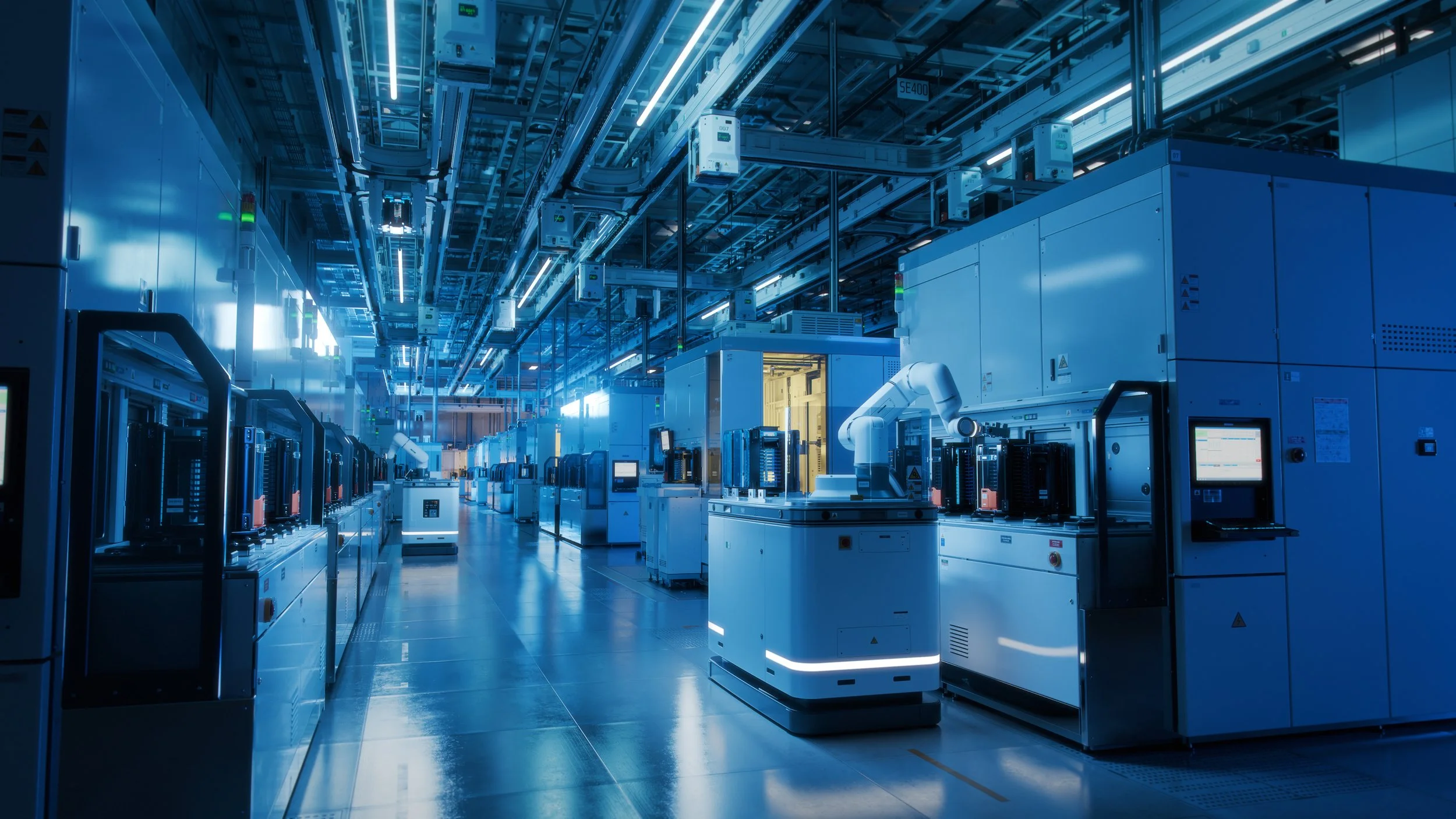
Process Engineers work closely with fabrication facilities to design and optimize the manufacturing steps that turn raw silicon wafers into finished semiconductor devices.
-
Integration Engineers merge various semiconductor components into larger systems or platforms, ensuring seamless compatibility and optimal performance across integrated circuits.
-
EDA (Electronic Design Automation) Engineers develop and maintain the software tools and automation systems that make it possible for chip designers to create and verify the billions of transistors inside modern microelectronics.
-
Test and Validation Engineers design and run the tests that verify every semiconductor device performs as intended and meets reliability standards before it reaches the customer.
-
Packaging Engineers develop and optimize the assembly and integration processes that encase finished chips in protective structures, ensuring they can be reliably connected to larger electronic systems.
-
Software and Firmware Engineers write the low-level code that runs directly on microelectronic hardware, enabling chips and embedded systems to perform their intended functions.
-
Field Application Engineers serve as technical advisors who help customers integrate semiconductor products into their designs, providing guidance, troubleshooting, and support throughout the development process.
-
Advanced Technology Development Engineers work at the frontier of the field, researching and developing new materials, processes, and device architectures that will power the next generation of semiconductor products.
-
Quality Assurance Engineers implement rigorous quality control processes and standards to ensure that every semiconductor product meets specifications and performs reliably in the field.
-
Cybersecurity Specialists protect semiconductor devices, chip designs, and microelectronics supply chains from cyber threats, tampering, and intellectual property theft throughout the design, manufacturing, and deployment lifecycle.